March 2026 EMG industry update: wearables, digital twins, and market momentum
A March 2026 roundup of notable developments in EMG and myoelectric sensing, from wearable muscle-metabolism research to digital twin modelling and growing demand for portable wireless systems.
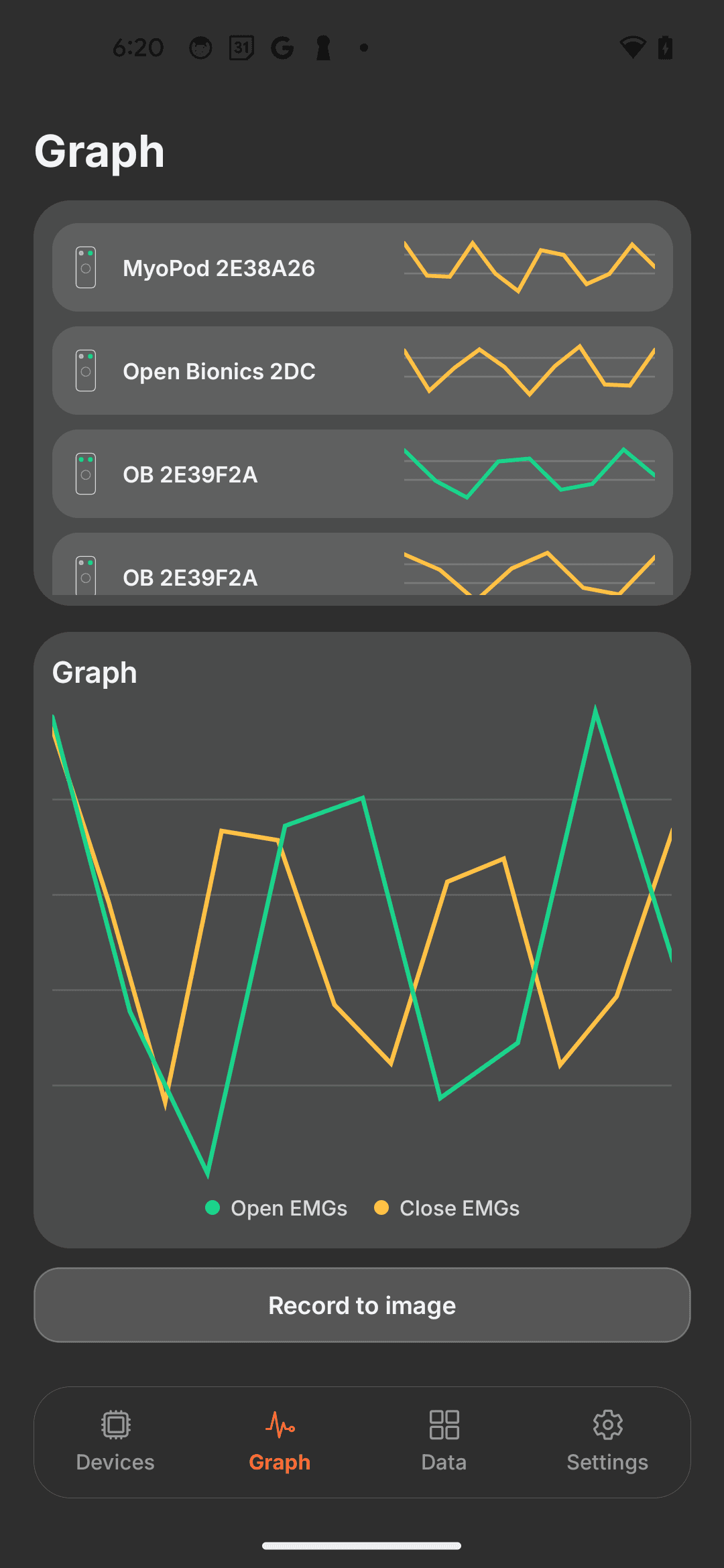
March 2026 brought a clear signal from the EMG market: myoelectric sensing is moving further out of specialist labs and into wearable, applied performance workflows. This month’s themes were consistent across research, product development, and coaching culture: more portable systems, more intelligent modelling, and more demand for usable muscle data in real environments.
1. UBC and Samsung explore real-time muscle metabolism
On 17 March 2026, researchers at the University of British Columbia announced a collaboration with Samsung Electronics Canada focused on wearable muscle monitoring beyond heart-rate tracking.
The project combines electromyography with near-infrared spectroscopy to estimate muscle metabolism and lactate-threshold-related changes non-invasively. If that workflow matures, it could make metabolic decision-making much easier to use in training settings where blood-based testing is too slow, invasive, or impractical.
For sports performance teams, the takeaway is straightforward: the next generation of wearable sensing is not just about movement or cardiovascular load. It is increasingly about linking muscle activation to underlying metabolic state in a form athletes can use live.
Source: UBC Faculty of Medicine
2. Digital twins keep gaining ground in neuromusculoskeletal modelling
Another strong theme in March was the rise of digital twins in biomechanics and clinical-performance modelling. These systems combine mechanistic modelling with AI to build subject-specific simulations that can respond to live physiological inputs, including EMG.
Two practical implications stand out:
- coaches and researchers can model likely muscle-tendon responses before load is applied in the field,
- injury-risk workflows are becoming more predictive as models absorb coordination and fatigue patterns from wearable biosignals.
That matters because EMG becomes more valuable when it does not sit in isolation. Once live muscle data is fused with movement, fatigue, and subject-specific models, it becomes part of a decision system rather than just a waveform.
Sources: PMC wearable biosensing review, bioRxiv clinical digital twins preprint
3. Science-based training content keeps normalising EMG
EMG is also becoming more visible in mainstream training content. Science-led creators and coaches are increasingly using surface EMG to compare exercises, test technique choices, and explain why one setup may bias a muscle differently from another.
That does not mean every consumer interpretation is rigorous. It does mean the market is moving toward data-backed training decisions, and muscle-sensing tools are becoming easier for non-specialists to understand. For product builders, that is an important shift: clearer user expectations often drive demand for simpler hardware and better software experiences.
Source: ANR muscle sensor application examples
4. The market keeps favouring smaller, wireless systems
Industry forecasts continue to point to a growing global EMG market, with momentum driven by tele-rehabilitation, decentralized assessment, and portable sports-science tooling.
The important commercial direction is less about the headline number and more about where the growth is going. Buyers increasingly want systems that are:
- easier to deploy outside a formal lab,
- lighter and less intrusive in movement-heavy sessions,
- easier to interpret in software,
- and better suited to repeatable field use.
That trend strongly favors wireless, wearable EMG products over older lab-first setups that are expensive, harder to operationalise, and slower to fit into day-to-day performance workflows.
Sources: Research Nester, Technavio EMG market analysis
Why this matters for Myometric
Taken together, March’s developments reinforce the same point: the opportunity is not just to record EMG, but to make EMG usable in dynamic, repeatable, decision-ready settings.
That is exactly where portable sensing, cleaner workflows, and better app experiences matter most. As the category grows, the winners are likely to be systems that keep research-grade signal quality while reducing setup friction for coaches, practitioners, and product teams.
Explore the hardware
See how MyoPods turn EMG research into a portable workflow
If you're evaluating tools for signal capture, review the MyoPods hardware page for specs, workflow fit, and bundle options.